


Why Clean Beauty Ingredients Matter for Your Skin
Clean beauty ingredients help you choose skincare that is formulated for safety, transparency, and real performance. If you want fewer irritants, clearer labels, and barrier-friendly results, start by understanding what brands include, what they leave out, and how to verify claims.
Quick Guide To Clean Beauty Ingredients:
- What “Clean” Means: Ingredients selected to minimize known or suspected health and environmental hazards, with clear labeling
- What It Typically Excludes: Commonly restricted categories like certain parabens, phthalates, formaldehyde releasers, and harsh surfactants
- What To Look For: Proven hydrators and barrier-supporting actives like hyaluronic acid, collagen, squalane, and aloe
- How To Validate: Read full INCI lists and cross-check with a trusted ingredient reference
- How Nanolisse Fits In: Streamlined formulas that prioritize collagen and hyaluronic acid, plus sulfur and silver in the Collagen Mist, without harsh fillers or added fragrance
Skincare labels can be confusing because marketing terms are not consistent across the industry. Many products still rely on vague language like “fragrance” or broad claims like “natural,” which do not tell you whether a formula is low-irritant or responsibly preserved.
Clean beauty ingredients shift the decision from hype to evidence. The practical goal is simple: reduce exposure to avoidable sensitizers and controversial additives, while keeping performance high.
Clean beauty is also tied to health equity. Multiple public health reviews continue to highlight uneven exposure to potentially hazardous cosmetic chemicals across different communities. That makes transparent ingredient choices about more than preference.
At Nanolisse, we focus on clean beauty ingredients that earn their place in a routine. We keep formulas simple, rely on nano-absorption for efficient delivery, and design products to be makeup-friendly with no harsh fillers or added fragrance.
The Science and Standards of Skincare Safety

The clean beauty movement has evolved from a niche trend into a data-driven industry standard. Leading retailers have taken the lead in defining what constitutes a clean product by creating extensive restricted substances lists. These lists often exclude hundreds or even thousands of ingredients linked to human health issues. Scientific research on ingredient decoding shows that understanding these standards is the first step toward a safer routine.
Defining Clean Beauty Ingredients vs Natural Labels
It is vital to distinguish between clean, natural, and organic labels. While natural ingredients are derived from nature, they are not always safer for your skin. For instance, some natural substances can be irritating, unstable, or poorly sourced.
Clean beauty prioritizes safety and skin tolerance above all else. This often includes safe synthetic ingredients that are more sustainable or effective than their natural counterparts. Transparency remains the most critical factor in identifying truly clean formulations, regardless of whether the origin is natural or synthetic.
When we talk about stability, we are referring to how an ingredient maintains its efficacy over time. Natural ingredients can sometimes degrade quickly when exposed to light or air. Clean synthetics are often engineered to be more resilient, ensuring that your product remains effective from the first drop to the last.
Essential Clean Beauty Ingredients for Skin Health
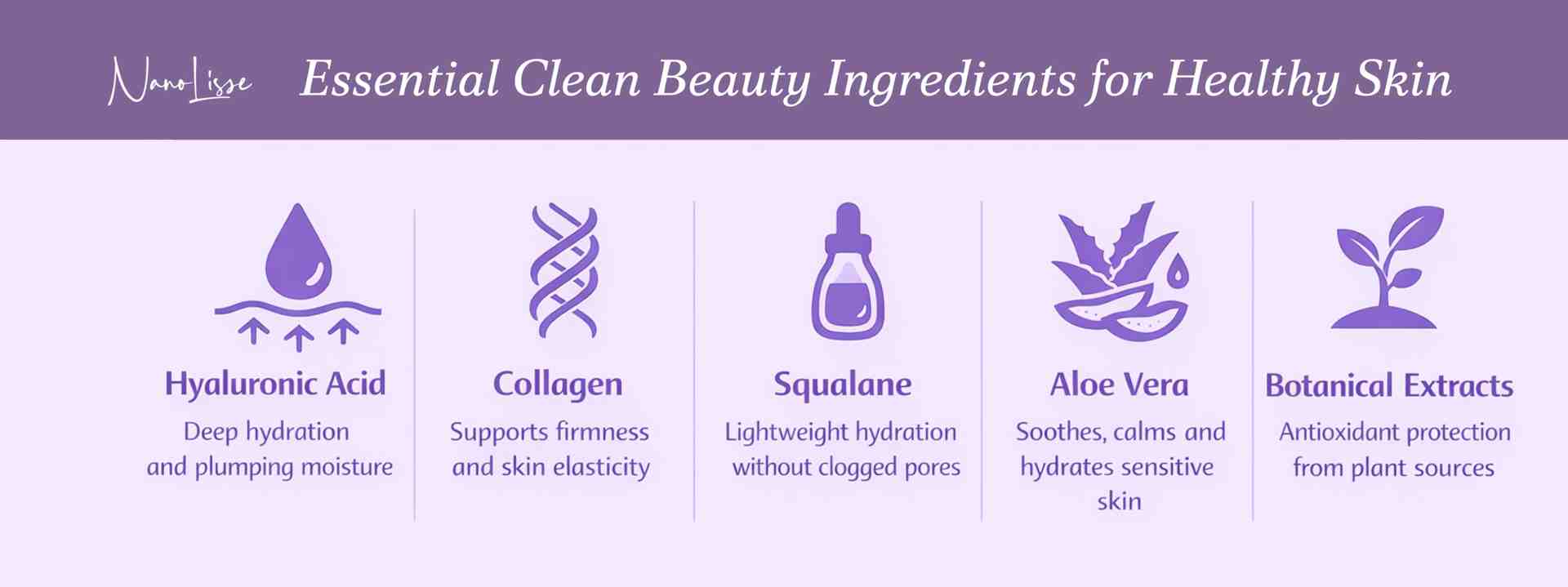
High-performance clean products rely on well-researched actives that support the skin barrier without causing inflammation. These clean beauty ingredients are chosen for their proven benefits and gentle nature. Key ingredients include:
- Hyaluronic Acid: A true moisture magnet that attracts up to 1,000 times its weight in water, leaving skin plump and hydrated. It is a naturally occurring substance that helps maintain the skin's ability to hold onto moisture.
- Collagen: Essential for supporting skin elasticity and firmness, it helps maintain a youthful glow and resilient complexion. It is a vital protein that provides structure to the skin.
- Squalane: A shelf-stable version of the skin's natural hydrator, squalene. It is often sourced ethically from renewable sugarcane or olives, providing moisturizing benefits without clogging pores.
- Aloe Vera: Renowned for its soothing properties, aloe vera provides immediate hydration and calms sensitive or irritated skin. It has been used for centuries for its healing and anti-inflammatory properties.
- Botanical Extracts: Ingredients like green tea and pomegranate offer natural antioxidant protection. These help to defend the skin against environmental stressors and promote overall skin health.
Verifying Product Safety with Online Databases
Consumers can take control of their skincare by using online tools to decode ingredient lists. Databases like INCIdecoder provide a full rundown of a product's composition, explaining the function and potential irritancy of each substance. This level of transparency helps shoppers avoid greenwashing, where brands use vague marketing terms to hide potentially harmful fillers.
By understanding the function of each ingredient, you can build a routine that is custom to your specific needs. You no longer have to rely on marketing claims that may be misleading. Instead, you can look at the data and decide what is best for your health and well-being.
Choosing Safe and Effective Clean Beauty Ingredients
Selecting the right products involves more than just avoiding a few red flag chemicals: it requires an understanding of how ingredients impact both personal health and the environment. The industry is shifting toward a verified safer model, where every component is characterized for its hazard level. This approach ensures that brands do not replace one toxin with a regrettable substitute that is equally harmful.
Addressing Health Inequities in the Beauty Industry
The clean beauty movement is also a matter of social justice. Disparities in exposure to harmful chemicals are a stark reality in the modern market. Statistics show that Black women are exposed to 80 percent more toxic beauty ingredients than white women.
Furthermore, a concerning 1 in 12 products marketed to Black women are ranked as highly hazardous. Choosing clean beauty ingredients is a powerful step toward demanding health equity and safer industry standards for all communities. We believe everyone deserves access to safe, effective skincare regardless of their background.
By supporting brands that prioritize clean formulations, you are helping to shift the entire industry toward better standards. This collective action can lead to safer products for everyone. It is about creating a future where no one has to compromise their health for beauty.
The Dirty List: Harmful Substances to Avoid
To build a truly clean routine, consumers should actively avoid the following categories of ingredients, which are commonly restricted in clean beauty standards:
- Parabens: These preservatives are commonly found in cosmetics but are suspected of causing hormonal imbalances. They are often used to extend shelf life at the expense of consumer safety.
- Phthalates: Often hidden under the vague term fragrance or parfum, phthalates are linked to endocrine disruption and other health issues. They are used to make fragrances last longer but can be harmful.
- Sulfates (SLS/SLES): Harsh surfactants like Sodium Lauryl Sulfate can strip the skin's natural barrier. This leads to dryness, irritation, and increased sensitivity over time.
- Formaldehyde Releasers: These preservatives slowly release formaldehyde over time, which is a known carcinogen. They are particularly concerning because they can cause skin sensitivity and long-term health issues.
- Mineral Oil: A petroleum byproduct, mineral oil can clog pores and trap impurities. While it can provide a barrier, it lacks the beneficial nutrients and antioxidant properties found in plant-based oils.
Achieving Results with Nanolisse Science
At Nanolisse, we believe that effective skincare should be simple and science-backed. Our formulations prioritize high-quality clean beauty ingredients to deliver real results without harsh fillers or synthetic fragrances. We focus on core components like collagen, hyaluronic acid, sulfur, and silver, combined with pure water.
Sulfur and silver are two powerful examples of clean beauty ingredients that offer significant benefits. Sulfur is known for its ability to gently clear pores and balance oil production. Silver provides natural antimicrobial properties that help maintain a healthy skin environment.
Our signature Collagen Mist uses nano-absorption technology to ensure these active ingredients penetrate deeply and effectively. This provides a makeup-friendly solution for firm, hydrated, and glowing skin. By focusing on a streamlined routine with carefully selected ingredients, we help you achieve a radiant complexion while adhering to the highest safety standards.

Frequently Asked Questions about Clean Beauty Ingredients
What is the difference between clean and natural beauty?
Clean beauty focuses on safety and non-toxicity, whether ingredients are natural or synthetic. Natural beauty refers only to ingredients derived from nature, which may not always be safe or sustainably sourced.
Are clean beauty products better for sensitive skin?
Generally, yes. Clean beauty products exclude many common irritants like harsh sulfates and synthetic fragrances, making them a gentler choice for those with reactive or sensitive skin types.
How can I tell if a product is truly clean?
Look for transparency in labeling and use databases like INCIdecoder to check individual ingredients. Avoid products with vague terms like fragrance and look for seals from retailers with strict standards.
Why are parabens and phthalates avoided in clean beauty?
These chemicals are avoided because they are suspected endocrine disruptors. This means they can interfere with the body's hormonal systems and have been linked to various health concerns.
What are some common clean beauty ingredients for hydration?
Key clean beauty ingredients for hydration include Hyaluronic Acid, Squalane, and Aloe Vera. These are all known for their ability to attract and retain moisture without causing irritation.
Accept a Cleaner Future with Clean Beauty Ingredients
Navigating skincare can feel overwhelming, but understanding clean beauty ingredients empowers you to make choices that truly benefit your skin and well-being. From deciphering confusing labels to recognizing the power of transparent, science-backed formulations, you are now equipped to build a better routine. We have seen how industry leaders are setting rigorous standards and how critical it is to address health inequities in beauty.
At Nanolisse, we are committed to this vision of clean, effective skincare. Our Collagen Mist and Hyaluronic Serum are crafted with purposefully selected clean beauty ingredients to deliver hydration and firmness without compromise. We believe in simplicity, transparency, and real results for healthy skin.
By choosing products that prioritize safety and efficacy, you are investing in the long-term health of your skin. You no longer have to settle for harsh chemicals or complex routines that do not deliver. Find the difference that truly clean, science-backed skincare can make for you today.
Explore our Collagen Mist and Hyaluronic Serum today and experience the Nanolisse difference.