


What Are Science-Based Skincare Ingredients?
_compressed.jpg?alt=media&token=7c155984-8921-4194-a1e9-b95fbe7b7b00 "Science-Based Skincare Ingredients for Real Results")
Science-based skincare ingredients are active compounds supported by peer-reviewed research and dermatologist consensus that deliver visible, measurable improvements in skin health. They rise above trends because their benefits are repeatedly shown in clinical studies, making them the most reliable foundation for an effective routine.
This guide on science-based skincare ingredients will cover:
- The most effective science-based skincare ingredients for hydration, barrier support, and anti-aging
- How to spot truly evidence-backed actives versus overhyped trends
- Why a focused, minimalist routine outperforms complex regimens
- How Nanolisse products deliver optimal concentrations and results
A recent analysis from Northwestern University reviewed 318 cosmetic ingredients and identified only 23 with true expert consensus, with mineral sunscreen and retinoids at the top. This shows how important it is to choose science-based skincare ingredients with strong evidence rather than what is simply popular. Many trendy ingredients, such as peptides and green tea, did not reach consensus. They are not necessarily harmful, but the existing data is not yet strong enough for dermatologists to recommend them universally.
Loading your skin with many overlapping products can cause irritation and disrupt the skin barrier. According to research published in the Journal of Clinical and Aesthetic Dermatology, dermatologists now emphasize a simple, consistent routine focused on a few proven actives: cleanse, moisturize, and protect, with targeted treatment where needed. At Nanolisse, we accept this philosophy by building minimalist formulas around science-based skincare ingredients that are designed to deliver real, trackable results.
The Essential Science-Backed Ingredients In Nanolisse Formulas
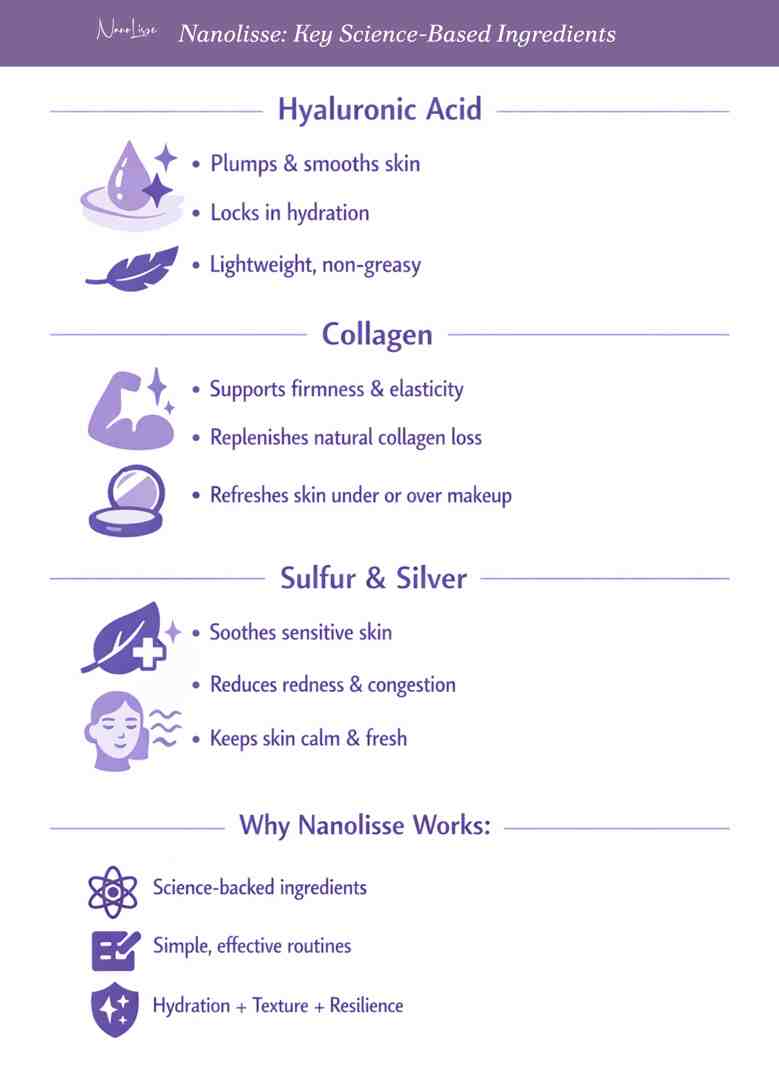
At Nanolisse, we follow a skincare philosophy rooted in published research and dermatologist insight. Each formula focuses on science-based skincare ingredients that improve texture, hydration, and resilience, keeping routines simple without sacrificing performance.
Hyaluronic Acid: The Hydration Powerhouse
Hyaluronic acid is a well-studied humectant that attracts and binds water in the skin, helping it look plump, smooth, and comfortable. It can hold many times its weight in water and supports a healthy moisture balance on the skin surface.
Our Hyaluronic Serum uses nano-absorption technology so the formula spreads evenly and layers well under other products and makeup. This helps deliver deep-feeling, lasting hydration without greasiness.
Collagen: Supporting Skin Structure And Elasticity
Collagen is the most abundant structural protein in skin and plays a key role in firmness and elasticity. Natural collagen production gradually slows with age, which can contribute to fine lines and loss of bounce.
Our Collagen Mist includes nano-sized collagen in a lightweight water base. It is designed to sit comfortably on the skin, support the feel of a supple surface, and work well both under and over makeup for a refreshed, hydrated look.
Sulfur And Silver: Calming And Clarifying
Sulfur and silver have a long history of use as soothing and clarifying agents, especially in skin that is prone to visible congestion or sensitivity. Research suggests they can help support a balanced surface environment and reduce the appearance of redness.
In our Collagen Mist, sulfur and silver are combined with collagen and hyaluronic acid in a gentle, water-based formula. This helps keep skin feeling calm, comfortable, and fresh throughout the day.
How To Build A Simple, Science-Based Skincare Routine
With science-based skincare ingredients, a focused routine usually outperforms complicated lineups. A few targeted steps used consistently do more for your skin than a crowded shelf of overlapping products.
Why Minimalist, Science-Backed Routines Work
Many social media routines layer several exfoliants, actives, and treatments in a single evening. A Northwestern University review of popular routines found that some used more than ten potentially irritating actives at once, which can disrupt the skin barrier and trigger sensitivity.
A minimalist approach avoids that by combining only the most useful science-based skincare ingredients in gentle, stable formulas. This keeps the barrier intact, reduces the risk of reactions, and makes it easier to tell what is actually working.
Choosing The Right Science-Based Skincare Products
When you compare options, look beyond the front label. Effective, science-based skincare products usually share key traits:
- Transparent ingredient lists and realistic claims
- Concentrations that align with clinical research
- Compatible pH and textures that layer well
- Packaging that protects sensitive actives from air and light
Our formulas use airless packaging to help guard potency and are fragrance free to minimize unnecessary irritation. Our nano-absorption technology in the Collagen Mist and Hyaluronic Serum is designed to support even distribution on the skin so ingredients can work optimally.
How Nanolisse Stands Out

Our Collagen Mist and Hyaluronic Serum are built to be both simple and high performing. Each product focuses on a small group of science-based skincare ingredients and leaves out harsh fillers or added fragrance.
The Mist features nano-absorption collagen, hyaluronic acid, sulfur, and silver in a water base that feels weightless on all skin types. The Serum adds a concentrated layer of hydration. Together, in our Combo, they create a streamlined routine that supports hydration, visible firmness, and a fresh glow with just a few steps.
Beyond Nanolisse: Other Key Science-Based Skincare Ingredients
While Nanolisse focuses on foundational hydration and skin comfort, it helps to understand other leading science-based skincare ingredients that dermatologists often recommend. This knowledge lets you build a routine that fits your goals without being pulled into short-lived trends.
Mineral Sunscreens: Your Daily Shield
If there is one non-negotiable science-based skincare ingredient, it is sunscreen. In many countries, sunscreen filters are regulated as over-the-counter drugs, so their UV protection is carefully evaluated for safety and effectiveness.
The Northwestern study found that mineral sunscreens containing zinc oxide or titanium dioxide were identified by more than 95 percent of dermatologists as effective for helping with fine lines and overall photoaging. According to research from the American Academy of Dermatology, large population studies also show that regular daily sunscreen use lowers the risk of skin cancer and slows visible aging over time.
For everyday wear, most dermatologists advise a broad-spectrum SPF 30 or higher, applied generously and reapplied during prolonged sun exposure.
Retinoids: A Gold Standard For Aging And Breakouts
Retinoids are vitamin A derivatives with decades of research support. They are among the best studied science-based skincare ingredients for fine lines, texture, and visible pores. The Northwestern analysis reported that over 90 percent of surveyed dermatologists agreed on their effectiveness.
Retinoids encourage cell turnover and support collagen production. While prescription strengths are potent, over-the-counter retinol and adapalene can still provide clear benefits in texture and clarity when used consistently.
If you are new to retinoids, experts usually suggest starting with a low strength a few nights per week, then slowly increasing as your skin adjusts.
Hydroxy Acids (AHAs And BHAs): Smoother, Brighter Skin
Alpha hydroxy acids, such as glycolic and lactic acid, work on the surface to dissolve the bonds between dead skin cells, revealing a fresher look. Oil-soluble beta hydroxy acids, like salicylic acid, reach into pores to help loosen excess sebum and buildup.
Over the counter, dermatologists often recommend staying within about 5 to 10 percent for AHAs and 0.5 to 2 percent for salicylic acid for regular use. These science-based skincare ingredients can refine texture, lessen the look of fine lines, and improve the appearance of uneven tone when used carefully.
Vitamin C (L-Ascorbic Acid): Antioxidant Protection
Vitamin C, especially in the pure L-ascorbic acid form, is another well established science-based skincare ingredient. It helps defend against environmental stressors and can visibly brighten dark spots and dullness.
Because L-ascorbic acid is sensitive to light, heat, and air, dermatologists advise choosing formulas in opaque, air-restrictive packaging. Clinical studies show that properly stabilized vitamin C serums can support collagen and reduce the look of pigmentation over several months of regular use.
Navigating The Skincare Landscape: Overhyped Ingredients And Why Formulation Matters
The skincare market moves quickly, and not every trending ingredient has strong data behind it. Many claims sound impressive but are based on early lab work rather than large, well controlled human studies.
Popular Ingredients With Limited Evidence So Far
The Northwestern University project that assessed 318 cosmetic ingredients found only 23 with clear expert consensus. Some widely promoted ingredients, such as certain peptides, DNA repair enzymes, aloe vera, and green tea extracts, did not meet that bar.
This does not mean they cannot help some people. It simply shows that dermatologists want more high quality clinical trials before recommending them as core science-based skincare ingredients for everyone.
Even hydrating favorites like hyaluronic acid need thoughtful formulation. While it is excellent at holding water on the skin surface, larger forms mostly sit in the outer layers, so their results can be similar to other humectants like glycerin when used in basic formulas.
The Critical Role Of Formulation And Delivery Systems
An ingredient is only as good as the formula around it. Several factors determine how well science-based skincare ingredients perform on your skin:
- Stability and protection from air and light
- The concentration used in the final product
- pH levels that support activity
- Texture and vehicle, such as serum, mist, or cream
Unstable ingredients like L-ascorbic acid can break down quickly if exposed to air or light, which lowers their effectiveness. Poorly matched pH can make exfoliating acids either too harsh or too weak.
Delivery systems matter as well. Technologies such as nano-absorption, used in our Collagen Mist and Hyaluronic Serum, are designed to support more even distribution and better contact with the skin surface. This helps each science-backed ingredient work where it is needed instead of sitting unevenly on top of the skin.
By focusing on stability, compatibility, and gentle delivery, we aim to help you get the most from every drop of product you use.
Potential Side Effects And Smart Use Of Science-Based Ingredients
Even the most trusted science-based skincare ingredients can cause issues when used incorrectly or on very reactive skin. Paying attention to your skin's response and introducing actives slowly can prevent most problems.
- Retinoids can cause temporary redness, dryness, and flaking, especially in the first weeks of use. They may also increase sun sensitivity, so daytime SPF is critical. Many health professionals advise avoiding retinoids during pregnancy or breastfeeding.
- Hydroxy acids such as AHAs and BHAs may trigger mild stinging, redness, or peeling, particularly at higher strengths or when used too often. Starting with lower concentrations and spacing out applications helps maintain the barrier.
- Strong lightening agents require careful guidance. Some, such as high strength hydroquinone, are prescription only in many countries and should be used with medical oversight due to the risk of irritation and rare side effects.
- Our products are formulated without added fragrance or harsh fillers to lower irritation risk, yet any formula can cause a reaction in very sensitive skin. We recommend a small patch test on the inner arm or behind the ear before applying new products to the entire face.
Listening to early warning signs such as itching, burning, or persistent redness and adjusting your routine accordingly is an important part of science-based skincare.

Frequently Asked Questions About Science-Based Skincare Ingredients
What Makes An Ingredient "Science-Based"?
It is supported by multiple peer-reviewed studies in humans and is widely recommended by dermatologists for specific, proven benefits such as hydration, brightening, or wrinkle reduction.
What are the most science-backed skincare ingredients?
Dermatologists often point to retinoids for cell turnover, vitamin C for brightening, niacinamide for barrier support, and sunscreen filters for UV protection. These ingredients are supported by years of clinical research.
What are the 4 ingredients in New Scientist skin care?
New Scientist Skin Care focuses on four core ingredients: retinol for renewal, vitamin C for tone, niacinamide for balance, and hyaluronic acid for hydration. Each one targets a basic skin need backed by research.
Do I Need A Complex Routine For Results?
No. A short routine that combines a gentle cleanser, sunscreen, and a few science-based skincare ingredients such as the Nanolisse Collagen Mist and Hyaluronic Serum is usually enough for healthy, glowing skin.
Experience Real Results With Science-Based Skincare Ingredients
Choosing science-based skincare ingredients is one of the most reliable ways to achieve and maintain healthy, radiant skin. When you focus on proven actives, stable formulas, and a routine you can stick with, you avoid guesswork and see clearer progress over time.
Our Collagen Mist and Hyaluronic Serum, available separately or as a Combo, are built around research supported ingredients like collagen, hyaluronic acid, sulfur, and silver in gentle, fragrance free bases. Nano-absorption technology supports effective delivery without a heavy feel, making them easy to use every day.
If you are ready to simplify your routine and still see meaningful improvement in hydration, visible firmness, and glow, explore the full collection today. Shop Nanolisse's science-backed skincare solutions now and experience how a focused, science-based approach can transform your skin.